Live Defense.
Attackers move in minutes. Polling every hour is not a strategy.
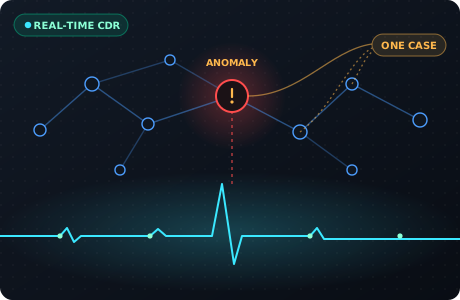
Detect as it happens, not on the next poll
Events update the same Hyper-Graph your attack paths live on, so a risky change shows up where you are already looking.
Cloud audit events
Audit events arrive from your cloud providers as they happen.
Real-Time CDR
Each event updates the Hyper-Graph, so a risky change redraws the attack paths you are looking at.
Neural Mesh
Vulnerability, identity, billing, kernel and compliance signals share one graph, so related alerts become one case.
Financial APT Hunter
Spend anomalies are tied to the identity and API activity behind them.
One case, not a hundred alerts
Real-Time CDR
Cloud audit events stream into the Hyper-Graph as they happen, so a risky change updates the attack paths right away, not on the next scan.
Neural Mesh
One correlation fabric: related signals from different engines become one case instead of separate alerts.
Financial APT Hunter
Quiet intrusions show up in the bill first. The hunter ties spend anomalies to the identity and API activity behind them.
One graph for posture and runtime
Live Defense writes to the same Hyper-Graph that Graph Engine reads, so posture and live events are never two separate pictures.
Explore the Hyper-Graph
Answers about
Live Defense
A scan shows the last snapshot. Live Defense applies cloud audit events to the graph as they arrive.
The correlation fabric of Arkhein: vulnerability, identity, billing, kernel and compliance signals share one graph, so related alerts become one case.
Spend anomalies tied to the identity and API activity that caused them, because quiet intrusions often show up in the bill first.
Cloud events come from your providers' audit logs. Kernel signals come only from hosts you choose to instrument.
It can follow the same Autonomous Resolution loop as any other finding: plan, pull request and verify.
Ready to see your cloud
as an attacker does?
Book a demo and our team will walk you through Arkhein on your own cloud.